
House Rewiring Services in Burbank, CA
Many Burbank homes were built decades ago and have electrical systems that have been updated at different points over the years. If you’re buying an older home, remodeling, or dealing with recurring electrical problems, an inspection can help determine the condition of the existing wiring.
We don’t assume a home needs rewiring because of its age. We’ll look at the wiring, panel, previous electrical work, and your current electrical needs before recommending the next step.
CALL NOW
Does Your Home Actually Need Rewiring?
Not every older home needs to be completely rewired. Likewise, not every electrical problem is a sign that your wiring has reached the end of its service life. The safest way to know is through a professional inspection that looks at your home’s wiring, electrical panel, and overall electrical system.
Below is a simple way to think about it before scheduling an assessment.
Your Home May Not Need Rewiring If…
Many homes continue to operate safely for decades without requiring a complete rewire. If your electrical system has been properly maintained, supports your household’s electrical needs, and isn’t showing signs of deterioration, rewiring may not be necessary.
An inspection can confirm whether your existing wiring is still performing safely and reliably.
Your Home Should Be Evaluated If…
Some warning signs don’t automatically mean you need a complete rewire, but they do deserve professional attention.
Examples include:
- Circuit breakers that trip repeatedly.
- Lights that flicker or dim unexpectedly.
- Outlets or switches that feel warm.
- Frequently relying on extension cords because your home doesn’t have enough outlets.
- Renovating an older home or adding significant new electrical equipment.
These situations often indicate it’s time to evaluate the condition of your electrical system before problems become more serious.
Your Home May Benefit From Partial Rewiring If…
Electrical problems are limited to one area of the home, such as a remodeled room, an older addition, or a section with outdated wiring. In these situations, replacing only the affected wiring may be a practical solution while the rest of the electrical system remains in good condition.
A professional assessment helps determine whether a targeted approach is appropriate or whether a broader upgrade would provide a safer long-term result.
Your Home May Need Complete Rewiring If…
Some homes have electrical systems that are no longer suited to modern safety standards or today’s electrical demands.
Examples include:
- Aging or deteriorated wiring.
- Multiple electrical issues occurring throughout the home.
- Outdated wiring methods or materials.
- A history of electrical repairs that no longer solve recurring problems.
- Major renovations where walls and ceilings will already be opened.
In these situations, a complete rewire may provide the safest and most practical long-term solution.
Understanding House Rewiring
Your home’s electrical wiring works behind the walls, so it’s easy to forget it’s there. But every light switch, outlet, appliance, and electrical fixture depends on that wiring to deliver power safely throughout your home.
House rewiring is the process of replacing outdated, damaged, or unsuitable electrical wiring with modern wiring that meets today’s safety standards and electrical demands. Depending on the condition of your home, this may involve replacing wiring throughout the entire house or updating only specific areas where improvements are needed.
Rewiring isn’t determined by the age of a home alone. Some older homes have been well maintained and continue to perform safely, while others may have outdated wiring materials or electrical systems that no longer meet the needs of modern households.
A professional inspection looks beyond the age of the property. It considers the condition of the wiring, the home’s electrical capacity, previous renovations, and how the electrical system is being used today.
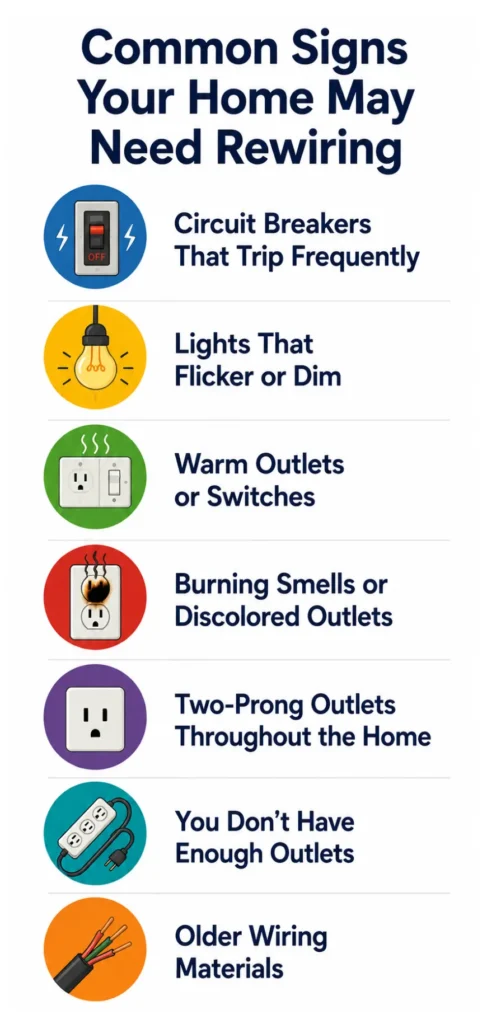
Common Signs Your Home May Need Rewiring
Electrical problems don’t always mean your home needs to be rewired. Some issues can be resolved with repairs, while others may point to aging wiring or a system that’s no longer suited to your home’s electrical demands. Understanding the difference can help you decide when it’s time to schedule a professional inspection.
Circuit Breakers That Trip Frequently
A breaker occasionally tripping can be normal, especially if a circuit is overloaded. However, repeated trips without a clear cause may indicate that your electrical system needs closer attention. An inspection can determine whether the issue is isolated or part of a larger wiring problem.
Lights That Flicker or Dim
Lights that flicker when appliances turn on or dim unexpectedly may suggest that parts of your electrical system are struggling to handle the demand. While the cause isn’t always outdated wiring, it’s a sign that your home’s electrical system should be evaluated.
Warm Outlets or Switches
Outlets and switches should never become noticeably warm during normal use. Heat can indicate loose electrical connections, overloaded circuits, or deteriorating wiring. Because electrical heat can become a safety concern, it’s important to have the issue inspected promptly.
Burning Smells or Discolored Outlets
A burning odor, scorch marks, or discoloration around outlets or switches should never be ignored. These symptoms may indicate overheating or damaged electrical components and should be evaluated as soon as possible.
Two-Prong Outlets Throughout the Home
Many older homes still have two-prong outlets that were installed before grounding became standard. While they don’t automatically mean your home needs complete rewiring, they often indicate an older electrical system that may benefit from a professional evaluation.
You Don't Have Enough Outlets
If extension cords and power strips have become a permanent part of daily life, your home’s electrical system may no longer match the way you use electricity today. This doesn’t always require whole house rewiring, but it’s often a good time to evaluate whether your electrical system should be updated.
Older Wiring Materials
Some older homes contain wiring methods or materials that may no longer meet modern expectations for safety and performance. If you know your home has older wiring—or you’re unsure what type of wiring is behind the walls—an inspection can help you understand its condition and whether updates are recommended.
Schedule an Inspection
Partial Rewiring vs. Whole House Rewiring
| Factor | Partial Rewiring | Whole House Rewiring |
|---|---|---|
| Scope | Updates wiring in a specific area or selected circuits | Replaces wiring throughout the home |
| When It May Be Appropriate | Problems are limited to one room, area, or circuit | Electrical problems are widespread throughout the home |
| Typical Situations | Kitchen/bathroom remodel, garage or basement work, adding circuits | Aging or deteriorated wiring throughout the property |
| Electrical Issues | Issues are isolated to specific areas | Multiple rooms experience recurring electrical problems |
| Existing Wiring | Most existing wiring remains in good condition | Much of the existing wiring may need replacement |
| Renovation | Useful when updating a specific part of the home | Often considered during major renovations involving multiple areas |
| Approach | Targeted improvements where needed | Comprehensive replacement of the home’s wiring |
| Long-Term Goal | Correct specific problems and improve selected areas | Create a consistent, modern electrical system throughout the home |
| How We Decide | Based on the location and condition of the affected wiring | Based on the overall condition and extent of electrical problems |
| Best Next Step | Professional inspection to determine which areas need attention | Professional inspection to confirm whether a complete rewire is appropriate |
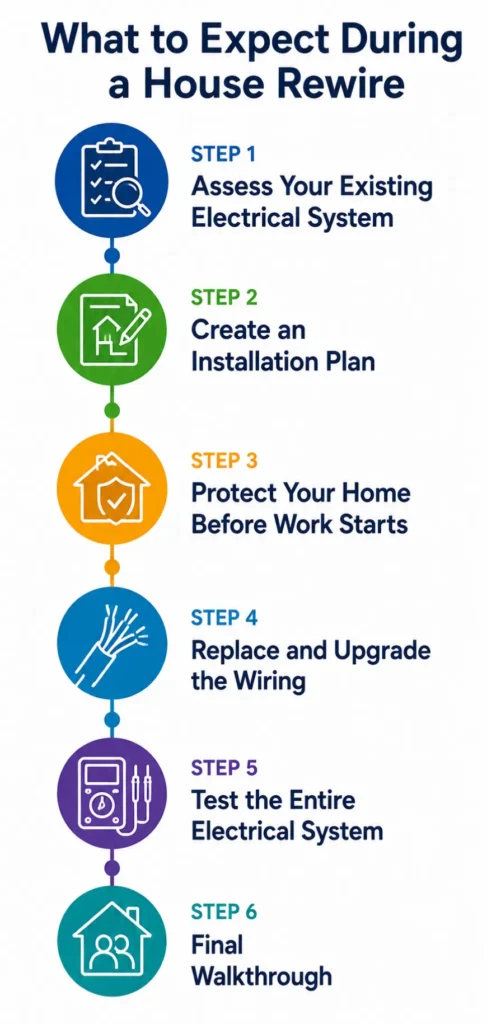
What to Expect During a House Rewire
Rewiring a home is a significant project, but it shouldn’t feel unpredictable. Before any work begins, we’ll explain the scope of the project, answer your questions, and make sure you understand what to expect from start to finish.
Every home is different, so the exact process will vary. However, most house rewiring projects follow the same general steps.
Step 1 — Assess Your Existing Electrical System
Every project begins with a detailed assessment of your home’s electrical system. We’ll inspect the existing wiring, electrical panel, outlets, switches, and other key components to understand the overall condition of the system and determine whether partial or whole house rewiring is the most appropriate solution.
Step 2 — Create an Installation Plan
Once the assessment is complete, we’ll explain our recommendations and walk you through the project. We’ll discuss the work involved, identify areas that will need access, answer your questions, and help you understand the expected timeline before any work begins.
Step 3 — Protect Your Home Before Work Starts
Rewiring often requires access behind walls, ceilings, or other finished areas. Before work begins, we’ll take reasonable steps to protect the surrounding work areas and organize the project to minimize unnecessary disruption whenever possible.
Step 4 — Replace and Upgrade the Wiring
We’ll remove or disconnect outdated wiring where appropriate and install new wiring that meets current electrical requirements. During this stage, we may also replace outlets, switches, or other electrical components that are part of the approved project.
Step 5 — Test the Entire Electrical System
Once the installation is complete, we’ll test the new wiring and electrical connections to verify everything is operating safely and as intended. Every circuit included in the project is checked before the work is considered complete.
Step 6 — Final Walkthrough
Before we leave, we’ll walk through the completed work with you, explain what was done, answer any remaining questions, and make sure you’re comfortable with your updated electrical system.
Can You Stay in Your Home During a House Rewire?
One of the first questions many homeowners ask is whether they’ll need to leave their home while rewiring is underway. The answer depends on the scope of the project, the condition of the existing electrical system, and how the work is planned.
In many cases, homeowners can remain in their home while portions of the electrical system are being updated. For larger projects, there may be periods when power is temporarily disconnected or when certain rooms are unavailable while work is being completed.
Every project is different, which is why we’ll explain the expected level of disruption before work begins so you can plan accordingly.
Smaller Projects
If only part of the home’s wiring is being replaced, the work is often limited to specific rooms or areas. This can reduce disruption and allow much of the home to remain usable throughout the project.
Whole House Rewiring
A complete rewire naturally involves more planning. Depending on the home’s layout and the scope of work, different areas may be completed in stages. Temporary power interruptions may also be necessary while new wiring is installed and tested.
Before work begins, we’ll discuss the project schedule so you know what to expect each step of the way.
If You’re Planning a Renovation
House rewiring is often easier when walls or ceilings are already being opened as part of a renovation. Coordinating electrical work with remodeling projects can reduce duplicate work and make the overall project more efficient.
If you’re planning a kitchen remodel, home addition, or major renovation, we’ll help you determine the best time to complete any necessary electrical upgrades.
Planning Makes the Difference
The level of disruption isn’t determined by rewiring alone—it’s determined by preparation.
Before the project starts, we’ll discuss:
- Areas that will be worked on first.
- Expected power interruptions.
- Access to rooms or workspaces.
- Project timeline.
- Questions or concerns you have before work begins.
Good planning helps homeowners feel prepared instead of surprised.
Should You Rewire Before Renovating?
If you’re planning to remodel your home, it’s worth thinking about your electrical system before new walls are closed, cabinets are installed, or finishes are completed. Renovations often provide the best opportunity to update aging wiring because much of the access needed for electrical work is already available.
That doesn’t mean every renovation requires rewiring. However, combining electrical improvements with a remodeling project can reduce duplicate work, minimize disruption, and help prepare your home for future electrical needs.
Kitchen Renovations
Modern kitchens place far greater demands on electrical systems than they did decades ago. New appliances, additional countertop outlets, improved lighting, and dedicated circuits may all require updates to the existing wiring.
If your kitchen is already being remodeled, it’s often the ideal time to evaluate whether the surrounding wiring should be upgraded as well.
Bathroom Remodels
Bathrooms have specific electrical safety requirements that may differ from older installations. If walls are already open during a remodel, updating the wiring at the same time can simplify the project and help ensure the electrical system supports today’s standards and your planned fixtures.
Home Additions and Garage Conversions
Adding living space usually means adding new electrical demand. Whether you’re building a home office, converting a garage, or expanding your home, it’s a good opportunity to evaluate whether your existing electrical system is prepared to support the additional load.
Planning Beyond Today’s Project
Many homeowners begin with one improvement and gradually add others over the years.
For example:
- An EV charger.
- A home office.
- Solar panels.
- Battery storage.
- A workshop.
- New HVAC equipment.
Looking at the bigger picture now can help avoid reopening walls or repeating electrical work later.
Learn more about Electrical Panel Upgrade and EV Charger Installation before renovating.
What You Can Expect During a House Rewiring Project
Rewiring a home is one of the most significant electrical projects a homeowner can undertake. It requires careful planning, clear communication, and recommendations that are based on your home’s actual condition—not assumptions. Our approach is built around helping you understand your options before making an important investment.
We Start With an Assessment, Not a Recommendation
No two homes have the same electrical history. That's why we begin by evaluating your existing wiring, electrical panel, and overall electrical system before discussing solutions. - Sometimes a repair is enough. - Sometimes partial rewiring makes sense. - Sometimes a complete rewire provides the safest long-term outcome. Our recommendation depends on what your home actually needs.
We Think Beyond Today's Problem
House rewiring isn't only about replacing aging wiring. It's also an opportunity to prepare your home for future electrical needs. Whether you're planning a renovation, adding an EV charger, installing new appliances, or simply modernizing an older home, we'll help you consider how today's decisions may affect tomorrow's projects.
Respect for Your Home
Major electrical work can feel disruptive, but it doesn't have to feel chaotic. We take time to plan the project, communicate clearly, protect work areas whenever possible, and leave your home clean and organized as each stage of the work is completed.
We Explain the "Why"
If we recommend electrical work, we'll explain the reason behind it in straightforward language. You'll understand what we found, why it matters, and what options are available before making any decisions. We believe homeowners should feel informed—not pressured.
Safety Guides Every Recommendation
Electrical work should never be based on guesswork. Every recommendation we make is guided by the condition of your electrical system, applicable electrical codes, and the long-term safety of your home. If your existing wiring continues to perform safely, we'll tell you. If improvements are recommended, we'll explain why.
Frequently Asked Questions About House Rewiring
There’s no single sign that confirms a home needs complete rewiring. A professional inspection looks at the overall condition of your electrical system, including the wiring, electrical panel, outlets, switches, and any recurring electrical problems. From there, we can explain whether a repair, partial rewire, or whole house rewire is the most appropriate solution.
No.
Age alone doesn’t determine whether a home needs rewiring. Some older homes have been updated over the years and continue to perform safely, while others may still have aging wiring or electrical systems that no longer meet today’s needs.
The timeline depends on the size of the home, the scope of work, and whether the project involves partial or whole house rewiring. During your assessment, we’ll explain the expected schedule so you know what to expect before work begins.
In many cases, yes.
Some projects can be completed in stages, allowing homeowners to remain in the home while work is underway. Larger projects may involve temporary power interruptions or limited access to certain areas. We’ll discuss the expected level of disruption before the project begins.
Many panel upgrades require permits and inspections. Requirements can vary depending on the scope of the project and local regulations.
Some access behind walls or ceilings is often necessary during a rewiring project. The amount of access depends on your home’s construction and the scope of work. We’ll explain where access is needed and plan the work as carefully as possible before getting started.
An electrical panel upgrade increases your home’s ability to distribute electrical power safely, while house rewiring replaces the wiring that carries electricity throughout the home.
Yes.
If the issue is limited to a specific area or you’re remodeling part of your home, partial rewiring may be a practical solution. After evaluating your electrical system, we’ll recommend the approach that best fits your home’s condition and your long-term plans.
Often, yes.
If you’re already updating your electrical system, it can be an ideal opportunity to improve convenience by adding outlets, dedicated appliance circuits, or wiring that better supports the way your household uses electricity today.
Ready to Find Out If Your Home Needs Rewiring?
If you've noticed electrical warning signs, are planning a renovation, or simply want peace of mind about your home's wiring, we're here to help.