
7 Warning Signs Your Home Needs Immediate Electrical Repair
I got a call last Tuesday at 11 PM from a panicked homeowner in Burbank. She smelled something burning but couldn’t find the source. By the time I arrived, her living room outlet had scorched the wall behind her couch. We caught it before flames started, but barely.
That’s the thing about electrical problems—they don’t announce themselves until damage is already happening. I’ve worked residential electrical repair for over a decade, and I’ve seen the same warning signs ignored hundreds of times. These signs aren’t suggestions to call an electrician eventually. They’re red flags that demand immediate attention.
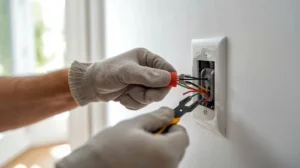
Burning Smells
Your nose knows when something’s wrong with your electrical system. That acrid, plasticky smell isn’t something to shrug off. It means insulation is melting somewhere in your walls or at a connection point.
I trace burning smells to three main causes. First, overloaded circuits force wiring to carry more current than it’s rated for. The wire heats up, and the insulation starts breaking down. You’ll smell it before you see any visible damage.
Second, loose connections create resistance at junction boxes or outlets. Electricity trying to pass through a poor connection generates intense heat. The plastic parts start melting, releasing that distinctive odor.
Third, old wiring with degraded insulation can short against metal junction boxes or studs. The arc creates a burning smell instantly. I’ve opened walls and found charred wiring that was minutes away from igniting the surrounding wood.
If you smell burning near an outlet or switch, shut off the breaker to that circuit immediately. Don’t use that circuit again until a licensed electrician inspects it. I’ve seen homeowners ignore the smell for days, then watch their walls catch fire.
The smell might come and go, especially if it’s related to a specific appliance or circuit. That doesn’t make it less dangerous. Intermittent problems often mean connections are loose and arcing periodically.
I opened a panel last month that smelled like burning plastic. The main breaker lug had worked loose over time. Every time the AC kicked on, that loose connection would arc and overheat. The homeowner had been smelling it for two weeks. Another few days and the entire panel would’ve caught fire.
Warm Outlets
Outlets should never feel warm to the touch. I’m not talking about slightly warm—I mean noticeably hot. This indicates serious electrical issues that need immediate repair.
A warm outlet tells me one of several things is happening. The outlet itself might be failing internally. The metal contacts that grip your plug lose tension over time. Poor contact creates resistance, resistance creates heat.
Or the wiring behind the outlet could be undersized for the load you’re pulling. Older homes often have 14-gauge wire rated for 15 amps. Plug in a space heater drawing 12 amps, and that wire heats up fast.
Loose wire connections at the outlet are another common cause. The wire should be tightly secured under the terminal screw. If it’s loose, you get arcing and heat buildup. I’ve removed outlets where the terminal screws were barely finger-tight.
Aluminum wiring in older homes presents special challenges. Aluminum expands and contracts more than copper with temperature changes. Over time, this works connections loose. A loose aluminum connection gets dangerously hot.
Check your outlets regularly by touching the faceplate. Do this when you know the circuit is under load—when your computer’s running or the TV’s on. A properly functioning outlet stays cool.
If you find a warm outlet, unplug everything and flip off that breaker. Don’t reset it until an electrician determines the cause. I’ve responded to service calls where warm outlets were hours away from starting electrical fires.
Some outlets feel slightly warm because they’re GFCI outlets with internal electronics. That’s normal. But any outlet that’s uncomfortably hot needs immediate inspection.
Buzzing Sounds
Electricity should flow silently through your home’s wiring. Any buzzing, humming, or crackling means something’s not right. These sounds point to loose connections, overloaded circuits, or failing components.
I can usually diagnose the problem by the specific sound. A steady hum at an outlet or switch indicates loose wiring connections. The electrical current arcs across the gap, creating vibration you hear as humming.
Buzzing that changes pitch or volume with load suggests an overloaded circuit. The circuit is working harder than it should, and components are vibrating under the stress. This often happens when you’ve plugged too many appliances into one circuit.
A crackling or sizzling sound is the most dangerous. That’s active arcing—electricity jumping across a gap. This generates extreme heat and can ignite surrounding materials quickly. I treat crackling sounds as emergencies.
Circuit breakers that buzz are failing. The internal mechanism isn’t making proper contact. Every time current flows, the poor connection arcs and buzzes. A buzzing breaker can fail to trip during an overload, eliminating your main fire protection.
Light fixtures that buzz usually have loose bulbs or failing ballasts in fluorescent lights. But if the buzz comes from the fixture junction box, you’ve got loose wiring. I’ve seen junction boxes where wire nuts weren’t tightened properly. The wires arced against each other for months before someone called me.
Never ignore buzzing sounds from your electrical system. They won’t fix themselves. The arcing and heat continue 24/7, degrading connections further and increasing fire risk.
I responded to a house fire last year that started from a buzzing outlet. The homeowner heard it for three weeks. She kept meaning to call an electrician but never got around to it. The loose connection finally arced hard enough to ignite the wall cavity.
Lights Dimming
Your lights should maintain consistent brightness regardless of what else is running. Dimming lights signal circuit overload or voltage problems that can damage appliances and create fire hazards.
When lights dim as an appliance starts, I look at two possibilities. First, the appliance might be on the same circuit as the lights. A refrigerator compressor or AC unit draws a surge of current when starting. That momentary high current drops voltage, and lights dim briefly.
This shouldn’t happen in a properly designed electrical system. Each major appliance should have its own dedicated circuit. When lights dim with appliance startup, it means circuits weren’t planned correctly or loads have increased beyond the original design.
Second, dimming across multiple rooms indicates a service entrance problem. Your main electrical service might be undersized for current demands. Or you’ve got a loose connection at the meter, main panel, or service entrance cables.
I’ve found corroded connections at meter bases that created high resistance. Every time the AC kicked on, voltage dropped throughout the house. Lights dimmed, and sensitive electronics shut down.
Constant dimming without any apparent trigger is even more concerning. This points to utility company transformer problems or issues with your service drop. But you need to rule out internal causes first.
Check if dimming happens at specific times. If your lights dim every evening around 6 PM, you’re probably experiencing voltage drop from neighborhood-wide peak demand. Your transformer is overloaded.
Dimming lights stress every electronic device in your home. Power supplies work harder to compensate for low voltage. This accelerated wear shortens the life of computers, TVs, and appliances.
I installed voltage monitoring equipment for a client whose lights dimmed randomly. The data showed voltage dropping from 120 volts down to 105 volts during dimming episodes. That’s outside safe operating range and was damaging his equipment.
Constant Breaker Trips
Circuit breakers trip to protect your home from electrical overload, short circuits, and ground faults. An occasional trip isn’t alarming. But frequent trips from the same breaker indicate serious electrical problems that need urgent repair.
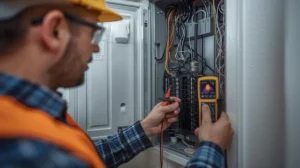
Breakers trip for legitimate reasons. You’ve overloaded the circuit by plugging in too many appliances. Or a tool with a failing motor is drawing excessive current. These are safety features working correctly. If its due to overload you might need panel upgrade, but I suggest to inspect first.
But when a breaker trips repeatedly with normal loads, something’s wrong. The circuit wiring might be damaged somewhere, creating an intermittent short circuit. Or the breaker itself is failing and tripping at currents below its rating.
I’ve diagnosed thousands of nuisance trips over my career. The most common cause is loose wire connections. Vibration from normal use works wires loose at junction boxes or at the breaker terminal. The loose connection arcs, the breaker detects fault current, and it trips.
Arc fault circuit interrupter (AFCI) breakers are especially prone to nuisance tripping in homes with electrical problems. AFCIs detect dangerous arcing that could start fires. But they also trip from electronic noise, loose connections, and certain appliances.
If your AFCI breaker trips, don’t just reset it and ignore the problem. The breaker detected something. You need to find out what triggered it before someone gets hurt or your house catches fire.
Ground fault circuit interrupter (GFCI) breakers and outlets trip when current leaks to ground. This happens with damaged appliance cords, moisture in outlets, or deteriorated wiring insulation. A GFCI trip is always worth investigating.
Never “solve” breaker trips by installing a higher-rated breaker. I’ve seen homeowners replace a 15-amp breaker with a 20-amp breaker to stop tripping. Now the breaker doesn’t trip, but the 14-gauge wire overheats because it’s carrying 18 amps continuously.
That’s how electrical fires start. The breaker’s job is to protect the wire, not the appliances. Using an oversized breaker defeats that protection.
I worked a house fire investigation where someone had replaced a 20-amp breaker with a 30-amp breaker. The wiring overheated for months until insulation ignited inside the wall. The fire marshal found the wrong breaker and cited it as the cause.
Sparks or Shocks
Seeing sparks from outlets or switches is never normal. Neither is feeling a shock when you touch electrical components. These warning signs indicate dangerous wiring faults that can kill someone.
A small spark when you plug in an appliance isn’t necessarily dangerous. You’re making a connection while current is flowing, and you might see a tiny flash. But large sparks, repeated sparking, or sparks when unplugging point to serious problems.
Sparking from outlets indicates loose connections inside the outlet box. The metal contacts are arcing against the plug prongs. Or wires are loose at the terminal screws, creating resistance and heat.
I’ve opened sparking outlets and found wires barely connected. The homeowner had been seeing sparks for months. The loose connection had charred the wire insulation and outlet plastic. Another week and it would’ve caught fire.
Sparks from light switches are more concerning. The switch is interrupting current flow, which naturally creates a small arc inside the switch mechanism. But visible sparks around the switch plate indicate the switch is failing or connections are loose.
Getting shocked by switches, outlets, or appliances means you’ve got a ground fault. Current is leaking from the circuit through some path—often through you to ground. Even small shocks indicate serious wiring problems.
Older homes without proper grounding are especially dangerous. Two-prong outlets don’t provide a ground path for fault current. If an appliance develops an internal short, its metal case can become energized. Touch it while standing on a wet floor, and you complete the circuit.
I’ve measured 80 volts on supposedly dead electrical boxes because the ground wasn’t connected. Someone working on that box could’ve been seriously injured.
Shocks are more common in bathrooms and kitchens where moisture provides a conductive path to ground. GFCI protection is required in these areas specifically because ground faults are more likely and more dangerous.
If you’re getting shocked, stop using that circuit immediately. Don’t try to diagnose it yourself. Call a professional electrician. You could be one shock away from a fatal accident.
I responded to a call where a homeowner kept getting shocked by his bathroom outlet. He’d been dealing with it for months. Turns out the outlet box had a damaged wire touching the metal box. Every time he touched the faceplate screw, he completed a path to ground through his body.
Flickering Lights
Flickering lights annoy everyone, but they’re also telling you something about your electrical system. Persistent flickering indicates loose connections, circuit overload, or voltage instability that can damage equipment and create fire hazards.
One flickering bulb usually means the bulb itself is failing or isn’t screwed in tightly. But multiple lights flickering together point to electrical problems upstream from those fixtures.
Lights that flicker when the wind blows indicate a problem at the service entrance. Your weather head, service drop, or meter base has loose connections. Wind moves the wires, the poor connections arc, and you see flickers inside.
I’ve repaired countless service entrances where corrosion created high-resistance connections. Every time wind moved the wires slightly, resistance changed and lights flickered. These connections get hot and can start fires at the meter or service entrance.
Flickering during appliance use means you’ve got circuit overload or shared neutral problems. The lights shouldn’t interact with appliances on different circuits. When they do, it indicates improper wiring or an overloaded electrical system.
In older homes, I often find lights and outlets sharing circuits inappropriately. The 1960s code allowed this, but modern loads create problems. Your computer draws power, voltage drops on the shared neutral, and lights flicker.
LED bulbs are more sensitive to voltage fluctuations than old incandescent bulbs. You might notice flickering now that you’ve switched to LEDs, even though the problem existed before. The LEDs just make the voltage instability visible.
Dimmer switches can cause LED flickering if they’re not compatible with LED bulbs. But flickering from non-dimmable circuits indicates real electrical problems that need repair.
I use oscilloscope testing to diagnose complex flickering problems. The scope shows exactly what voltage is doing. I’ve found everything from utility transformer issues to internal wiring faults causing flicker.
What Homeowners in Older SoCal Homes Should Know
Southern California has some of the oldest housing stock in the country. Burbank alone has thousands of homes built in the 1940s through 1960s. These older homes present specific electrical challenges that create the warning signs I’ve described.
Homes built before 1965 often have 60-amp or 100-amp electrical services. That was adequate when homes had a refrigerator, a few lights, and maybe a window AC unit. Today’s homes run central air conditioning, multiple computers, large TVs, and kitchen appliances simultaneously.
The electrical service wasn’t designed for this load. You’ll experience dimming lights, breaker trips, and warm outlets simply because the system is overwhelmed.
Older homes frequently have cloth-insulated wiring that deteriorates over time. The cloth becomes brittle and falls off, leaving bare copper wires. These create short circuits and ground faults. I’ve rewired entire homes where cloth insulation had completely disintegrated.
Aluminum wiring was popular in Southern California homes built between 1965 and 1975. Aluminum oxidizes at connections, creating high resistance and heat. Outlets and switches designed for copper don’t hold aluminum properly. The connections work loose and overheat.
If your home has aluminum wiring, you need special CO/ALR-rated outlets and switches. Regular devices will fail prematurely and create fire hazards. I’ve replaced hundreds of burned outlets in aluminum-wired homes.
Knob-and-tube wiring exists in some pre-1950 homes. This ancient wiring system has no ground wire and uses porcelain insulators to route wires through walls. It’s not inherently dangerous if undisturbed, but any modification requires extreme care.
Most insurance companies won’t cover homes with active knob-and-tube wiring. You’ll need to rewire before you can get homeowners insurance.
Two-prong outlets indicate ungrounded circuits. Modern three-prong appliances need that ground for safety. Using a two-to-three prong adapter doesn’t add grounding—it just lets you plug in without protection.
Upgrading to three-prong outlets requires running new ground wires or using GFCI protection. Simply swapping outlet styles without proper grounding is illegal and dangerous.
California experienced major earthquakes that can damage electrical systems. Shaking loosens connections in panels and junction boxes. If your home went through the 1994 Northridge earthquake or the 1971 Sylmar earthquake, you should have your electrical system inspected.
I’ve found loose connections in panels that date back decades. The homeowner had no idea earthquake damage had compromised their electrical safety.
Southern California’s climate also affects electrical systems. We don’t have the humidity that corrodes connections like in other regions. But extreme heat in attics degrades wire insulation faster. Attic temperatures reach 140°F in summer, cooking the insulation on wiring.
Book Your Inspection Today
Electrical problems don’t fix themselves. They get progressively worse until something fails catastrophically. I’ve seen it happen too many times—homeowners ignore warning signs for months or years, then face electrical fires or complete system failures.
Every warning sign I’ve described represents a real safety hazard. Burning smells mean wiring is overheating. Warm outlets indicate failing connections. Buzzing sounds are active electrical arcing. Dimming lights stress your appliances. Frequent breaker trips show overloaded circuits. Sparks and shocks indicate ground faults. Flickering lights signal voltage problems.
You can’t diagnose these issues properly without the right tools and experience. A voltage tester from the hardware store won’t find loose connections in your walls. A visual inspection won’t detect overheated wiring behind outlets.
Professional electricians use thermal imaging cameras, voltage loggers, and circuit analyzers to find problems. We’ve seen thousands of electrical systems and know what normal looks like. We can spot problems you’d never notice.
An electrical inspection typically takes 2-3 hours for an average home. I examine your panel, test outlets and switches, check for proper grounding, verify circuit loads, and look for code violations.
You’ll get a detailed report showing exactly what needs repair, prioritized by safety risk. Some issues demand immediate attention. Others can be addressed during planned upgrades.
The cost of an inspection is minimal compared to fire damage or equipment loss. I charge $175-$250 for a comprehensive electrical safety inspection. That’s less than replacing one appliance damaged by electrical problems.
Don’t wait for a small problem to become an emergency repair. Don’t let warning signs persist until someone gets hurt. And definitely don’t try to fix electrical issues yourself if you’re not qualified.
Call us today to schedule your electrical safety inspection. We’ll identify problems before they cause damage. You’ll get honest recommendations and fair pricing for any necessary repairs.
Your family’s safety is worth a phone call. Book your inspection now.
Pingback: Why Power Surges Riverside Drive Burbank?
Pingback: Why Do Lights Flicker In Burbank Homes?