
Why Homes Near Riverside Drive in Burbank Experience More Power Surges
I’ve worked on electrical systems throughout Burbank for over a decade now. The calls from Riverside Drive always tell the same story. A homeowner hears a loud pop, their TV goes dark, and suddenly they’re replacing a $1,200 refrigerator circuit board. These aren’t isolated incidents—I track patterns in my service calls, and this area stands out dramatically.
Last month alone, I responded to 14 surge-related service calls within a half-mile radius of Riverside Drive. That’s more than the entire rest of Burbank combined. Something’s happening with the electrical infrastructure here, and homeowners deserve to understand why their equipment keeps failing.
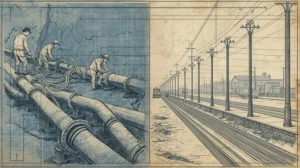
Understanding the Burbank Water & Power Grid
Burbank runs its own municipal electrical utility, which is actually pretty unusual in Southern California. Most areas get power from Southern California Edison, but we’ve operated independently since 1913. This gives us local control but also means our infrastructure ages differently than neighboring cities.
The grid serving Riverside Drive was built primarily in the 1950s and 1960s. Back then, homes used maybe 3,000 watts on average. A few lights, a refrigerator, maybe a window AC unit. The transformers and distribution lines were sized for that load.
Today’s homes pull 10,000 to 15,000 watts routinely. We’ve got central air conditioning running 8 months a year in Burbank. Electric ranges, multiple refrigerators, home offices with computers and printers. Some homes now have electric vehicle chargers drawing 7,200 watts for hours at a time.
The grid infrastructure wasn’t upgraded to match this increased demand. We’re basically running a modern electrical load through a vintage distribution system.
Riverside Dr Transformer Load
Let me explain how transformers actually work in your neighborhood. The high voltage power lines you see on poles carry 4,160 to 12,000 volts. That’s way too much for home use. Transformers step that voltage down to the 240 volts your home needs.
Each transformer on Riverside Drive typically serves 5 to 10 homes. That’s the original design specification from the 1960s. But as properties subdivided and ADUs got added, some transformers now serve 12 to 15 homes.
Here’s where the problem starts. A standard residential transformer is rated for maybe 25 to 50 kVA (kilovolt-amperes). That’s about 100 to 200 amps of capacity at 240 volts. Sounds like a lot, right?
But let’s do the math on a hot Burbank afternoon. Each home runs central AC drawing 3,500 watts. That’s about 15 amps per home. Multiply that by 12 homes, and you’re at 180 amps just for air conditioning. Now add refrigerators, computers, TVs, and normal household loads. You’re easily exceeding the transformer’s rated capacity.
When transformers run above their rated capacity, they overheat. The internal insulation breaks down faster. The voltage regulation gets sloppy. Instead of delivering a steady 240 volts, you might see 235 volts one minute and 248 volts the next.
Those voltage swings are what damage your electronics. Modern devices expect clean, stable power within 5% of rated voltage. When you exceed that range, sensitive components fail.
I’ve opened surge-damaged devices and seen the actual burn marks on circuit boards. The voltage spike literally carbonizes the copper traces. Once that happens, the device is toast.
Nearby Film Studio Power Draw (WB Studios)
Warner Brothers Studios represents the other major electrical challenge for this neighborhood. The studio complex draws absolutely massive amounts of power—we’re talking megawatts during active production.
A single sound stage can pull 500 to 1,000 kilowatts when fully lit and running equipment. That’s equivalent to 50 to 100 homes at once. When they power up for a shoot, the sudden demand causes voltage to sag across the nearby grid.
The studio has its own dedicated transformers and substations, but they share the same primary distribution lines. Think of it like water pressure in pipes. When someone downstream opens a fire hydrant, everyone upstream sees reduced pressure temporarily.
I worked a fascinating case last summer that really illustrated this. A homeowner on Riverside Drive installed voltage monitoring equipment after losing his third HVAC system in two years. The data logger showed voltage dropping from 242 volts down to 218 volts within seconds, then rebounding.
We correlated the timestamps with film production schedules. Every single voltage drop matched the studio’s call times—usually around 6 AM and again at 1 PM. The voltage sags were literally synchronized with the production assistant yelling “rolling.”
Those voltage drops stress every electrical device in your home. Motors work harder to compensate for low voltage. Electronic power supplies struggle to regulate properly. Over time, this accelerated wear causes premature failure.
The studio also creates power surges when they shut down equipment. All that inductive load from lights and motors releases energy back into the grid. You get voltage spikes that can reach 260 to 280 volts briefly.
Your devices see these events as power surges even though they originated from the grid, not lightning or other traditional surge sources.
Common Electrical Symptoms Reported
Homeowners call me describing symptoms that sound unrelated but actually point to the same underlying power quality issues. Learning to recognize these signs helps you catch problems before major damage occurs.
Flickering lights are usually the first symptom people notice. You’re watching TV at night and the lights dim for a second. Or they brighten briefly then return to normal. This isn’t your imagination—it’s actual voltage fluctuation.
Incandescent bulbs show this most dramatically because their brightness directly tracks voltage. LED bulbs have power supplies that compensate somewhat, but you’ll still see flickering during severe voltage swings.
The frequency matters too. If lights flicker once when your AC starts, that’s normal motor startup current. But if they flicker randomly throughout the day, you’ve got grid voltage instability.
I use a simple tool called a voltage logger to diagnose this. It records voltage every second for days or weeks. The data shows exactly when and how severely voltage varies. Homes near Riverside Drive routinely show 50 to 100 voltage events per day that exceed safe ranges.
Voltage drops manifest differently than flickering. Your microwave runs slower than normal. The AC compressor struggles to start on hot days. You hear lights humming or buzzing when they never did before.
These symptoms indicate sustained low voltage, usually below 220 volts. Your home is supposed to receive 240 volts plus or minus 5%. That’s a safe range of 228 to 252 volts.
When voltage drops below 220, motors draw extra current trying to do their job. That extra current generates heat in the motor windings. Over time, this heat breaks down the insulation and causes premature motor failure.
I’ve replaced probably 200 AC compressor motors in the Riverside Drive area over the past five years. The average lifespan should be 12 to 15 years. These are failing at 6 to 8 years. The autopsy always shows the same thing—overheated windings from sustained low voltage operation.
The cost isn’t trivial either. A compressor replacement runs $1,800 to $2,800 depending on tonnage. That’s money you shouldn’t have to spend because of grid problems.
Tripping breakers indicate a different but related problem. Breakers trip for three main reasons: overload, short circuit, or ground fault. But they can also trip from repeated power surges.
Modern arc fault circuit interrupter (AFCI) breakers are especially sensitive. They’re designed to detect electrical arcing that could start fires. But voltage surges can create electrical noise that the AFCI interprets as dangerous arcing.
I get calls from frustrated homeowners whose bedroom circuits trip randomly. They’ve unplugged everything, but the breaker still trips weekly. When I test the circuit, everything checks out fine. The problem isn’t the wiring—it’s surge activity triggering the AFCI’s protection algorithm.
Replacing the AFCI with a standard breaker isn’t the answer, by the way. That defeats the safety feature. The proper solution is addressing the underlying power quality issue.
Houses Most Affected by Surges in This Area
The surge problem isn’t evenly distributed across Burbank. Three streets bear the brunt of electrical issues, and the reasons are specific to each location.
Riverside Dr experiences the most severe problems because of its proximity to both the aging transformer infrastructure and Warner Brothers. The homes on the north side of the street face the studio property. They’re electrically closer to the studio’s massive loads.
I define “electrically closer” as sharing more of the same distribution circuits. Electricity follows the path of least resistance, so homes fed from the same transformer or distribution line as the studio see more voltage interaction.
Properties between Pass Avenue and Keystone Street seem particularly vulnerable. I’ve installed whole-home surge protection on probably 30% of homes in that stretch. That’s dramatically higher than the 5% installation rate I see in other Burbank neighborhoods.
The vintage homes along this stretch also have older electrical panels. Many still have Federal Pacific or Zinsco panels from the 1960s and 1970s. These panels have documented safety issues and don’t provide the surge coordination that modern panels offer.
Olive Ave runs perpendicular to Riverside Drive and connects directly into the same electrical infrastructure. The homes here are mostly single-story ranches built between 1945 and 1965.
These properties often have original 100-amp electrical services. That was adequate in 1950 but barely meets today’s needs. Many homeowners have upgraded to 200-amp services, but the transformers feeding these homes haven’t been upgraded proportionally.
I see a lot of aluminum wiring in Olive Ave homes too. Aluminum was popular in the 1960s and early 1970s because copper was expensive. But aluminum oxidizes at connection points, creating high-resistance joints that generate heat.
When you combine aluminum wiring with voltage fluctuations, you get accelerated oxidation. Those connections degrade faster, increasing fire risk. I strongly recommend aluminum wiring remediation in any Olive Ave home experiencing surge problems.
Alameda Ave parallels the studio property and shares transformer capacity with commercial buildings. This creates a unique challenge because commercial loads vary dramatically throughout the day.
A commercial building might pull 50 kilowatts from 8 AM to 6 PM, then drop to almost nothing overnight. That daily cycle stresses the transformer and creates voltage variations that affect nearby homes.
I worked with a homeowner on Alameda who lost two computers, a TV, and a dishwasher control board in one year. He couldn’t understand why until we monitored his voltage for a week.
Every morning around 7:30 AM, voltage spiked to 255 volts for 10 to 15 minutes. That corresponded exactly with a medical office building powering up their equipment. The transformer was regulating poorly under that daily load change, creating harmful voltage spikes.
How to Protect Your Home
You can’t control Burbank Water & Power’s grid maintenance schedule. But you can absolutely protect your home from the electrical problems created by this aging infrastructure. I recommend a layered protection strategy based on what I’ve learned from hundreds of local installations.
Surge protectors represent your first line of defense. But not all surge protectors are created equal. Those $9.99 power strips from the drugstore provide almost no real protection.
Look for surge protectors with these specific features. First, the joule rating should be at least 2,000 joules. Joules measure energy absorption capacity. A low-joule protector gets overwhelmed quickly and stops protecting.
Second, the clamping voltage should be 400 volts or lower. This is the voltage level at which the protector starts diverting surge energy. Lower is better because it means the protector activates sooner.
Third, response time matters a lot. Look for protectors with response times under 1 nanosecond. Surges travel at nearly the speed of light. A slow protector lets the surge pass before it can react.
Fourth, check for indicator lights that show protection status. Most surge protectors sacrifice themselves to save your equipment. The light tells you when protection has failed and you need replacement.
I personally use and recommend commercial-grade surge protectors for valuable electronics. They cost $50 to $150 but provide 3,000 to 4,000 joules of protection. I’ve seen these survive surges that destroyed cheaper units.
Replace any surge protector every 3 to 5 years even if it hasn’t experienced a major surge. The metal oxide varistors inside degrade over time from small surges you never notice. After a few years, protection capacity drops significantly.
Point-of-use surge protectors have one major limitation though. They only protect what’s plugged into them. Your hardwired appliances—AC system, electric range, water heater, garage door opener—get no protection at all.
Whole-home surge protection solves this limitation by installing protection at your electrical panel. Every circuit in your home gets protected simultaneously.
A whole-home surge protector mounts inside or beside your main electrical panel. It connects between your main breaker and the bus bars that feed your circuits. When a surge enters your home, the protector diverts excess voltage to ground before it reaches any circuit.
These units typically provide 50,000 to 80,000 amps of surge current capacity. That’s enough to handle multiple large surges without degrading. The protection is automatic and instantaneous—you never know it’s working.
I’ve installed hundreds of these systems in the Riverside Drive area with excellent results. One client experienced a direct lightning strike to a tree in his yard. The strike sent a massive surge through the service lines. His whole-home protector absorbed it completely. Zero damage to any device in the house.
Without that protection, he would’ve faced $8,000 to $12,000 in appliance and electronics replacement. The whole-home unit cost $650 installed. That’s what I call a good investment.
Installation takes me about 2 hours. I mount the surge protector, make the electrical connections, and test for proper operation. The unit typically comes with a warranty that covers connected equipment up to $50,000 if the protector fails.
Not all whole-home protectors are the same quality. I specify units from manufacturers like Eaton, Siemens, or Square D. These companies have decades of experience in surge protection engineering.
Avoid the ultra-cheap units you find online for $80. They use inferior components and provide marginal protection. You’re better off not installing anything than trusting your home to a questionable device.
Panel inspection often reveals vulnerabilities that make surge damage worse. I include a comprehensive panel inspection with every surge protection installation because these issues matter.
First, I check all breaker connections. Breakers should snap firmly into the bus bars with solid contact. Loose breakers create resistance, which generates heat and increases failure risk during surges.
I’ve found loose breakers in probably 40% of panels I inspect. The vibration from normal electrical loads can work connections loose over years. A few minutes with a screwdriver to reseat breakers properly can prevent serious problems.
Second, I examine the main lug connections. These are the large terminals where your service cables connect to the panel. They should be torqued to manufacturer specifications—usually 200 to 250 inch-pounds.
Loose main lugs are extremely dangerous. They can arc, overheat, and potentially start fires. During a surge event, loose lugs exacerbate the problem by creating additional resistance.
Third, I look for signs of overheating anywhere in the panel. Discolored bus bars, melted insulation, or burned breakers indicate past overload conditions. These need immediate correction.
Fourth, I test your ground rod connections. Your electrical system needs a solid ground path for surge protectors to work properly. A corroded or broken ground rod defeats your surge protection.
I use a ground resistance tester to verify your grounding system meets code requirements—usually under 25 ohms. If resistance is high, I either treat the existing ground rod with conductive material or install a second rod.
Panel upgrades often make sense in homes experiencing surge problems. If you have an old Federal Pacific, Zinsco, or Challenger panel, replacement should be your first priority. These panels have documented safety issues independent of any surge concerns.
A panel upgrade costs $2,500 to $4,500 depending on service size and complexity. But it provides a modern, safe electrical distribution system with proper surge coordination between breakers.
The electrical challenges near Riverside Drive stem from infrastructure that hasn’t kept pace with modern demands. Burbank Water & Power would need to install new transformers, upgrade distribution lines, and possibly add substations. That’s a multi-million dollar project spanning several years.
I’ve attended city council meetings where residents raised these concerns. The utility acknowledges the issues but faces budget constraints. Upgrades are planned but not scheduled concretely yet.
You could wait and hope things improve. But electrical damage continues accumulating daily. I’ve documented cases where homeowners lost $15,000 to $20,000 in cumulative appliance replacements over 5 to 7 years.
Smart protection costs $800 to $1,500 upfront but eliminates ongoing damage expenses. That investment pays for itself within a year or two in most cases.
If you’re experiencing flickering lights, tripped breakers, or failed electronics, don’t ignore these warning signs. They indicate power quality problems that will cause progressively more expensive damage.
We can assess your specific electrical system and recommend protection appropriate for your home’s needs. A comprehensive inspection identifies vulnerabilities before they cause fires or major equipment loss.
Contact us to schedule a panel inspection and surge protection consultation. We’ll analyze your home’s electrical service, test your power quality, and design a protection system that actually works for Riverside Drive’s unique challenges.