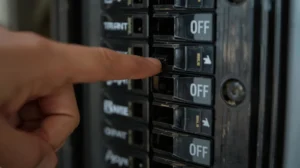
Your circuit breaker trips again. You reset the breaker and five minutes later, it happens again. I get calls about this every single day.
A circuit breaker keeps tripping for a reason. It’s doing its job by shutting off power before something dangerous happens. But constant tripped breakers mean you’ve got a problem that needs fixing.
I’ve been an electrician for over 10 years. Most breaker trips follow the same patterns. You can fix some yourself. Others need a professional electrician right away.
Common Reasons Breakers Trip
Circuit breakers are safety devices. They detect problems and shut off power to prevent fires or electrical shocks. Here are the common causes of breaker trips I see most often.
Circuit Overload
This is the number one reason your breaker keeps tripping. You’re trying to pull more power through one circuit than it’s designed to handle.
Every circuit has a limit measured in amps. A standard bedroom circuit handles 15 amps. When you plug in too many appliances on the same circuit, you exceed that limit.
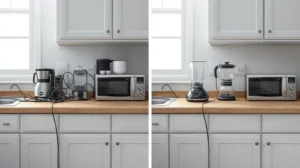
Last week I helped a homeowner who kept tripping the same kitchen circuit. She was running a microwave, coffee maker, and toaster at the same time. That’s about 25 amps on a 15-amp circuit. The breaker to trip was the only safe outcome.
I see this a lot with portable AC units and space heaters. These appliances pull 10-15 amps by themselves. Add them to a circuit that’s already powering lights and outlets, and you’ve got an overloaded circuit.
Short Circuits
Short circuits happen when a hot wire comes in contact with a neutral wire or ground wire. This creates a direct path for electricity with almost no resistance.
Massive amounts of current flow instantly. The circuit breaker tripping prevents the wiring from overheating and starting a fire. You might hear a pop or see a spark when this happens.
Faulty wiring causes most short circuits. Damaged insulation lets wires touch inside walls or outlet boxes. Rodents chewing through wires can create a short too.
I found a short circuit in an older home last month. A nail from a picture frame had pierced the wire inside the wall. Every time someone turned on that switch, the breaker trip happened instantly.
Ground Faults
Ground faults occur when electricity comes into contact with water or a grounded metal surface. This sends current where it shouldn’t go.
GFCI outlets and breakers protect against ground faults. These safety devices detect the problem in milliseconds and shut off power. You see these in bathrooms, kitchens, and outdoor areas.
Water and electricity don’t mix. A hairdryer falling into a sink can cause a ground fault. So can a sump pump that gets wet connections or a faulty cord on your AC unit.
I replaced a GFCI breaker for a customer whose bathroom circuit kept tripping. Turned out her exhaust fan had moisture buildup. The fault circuit interrupters did exactly what they’re supposed to do.
Old or Weak Breakers
Circuit breakers wear out over time. The internal mechanism weakens after years of heat cycles and trips. An old breaker might trip at lower loads than it should.
I see this in homes built before 1990. The breaker panel is 30 or 40 years old. Breakers that used to handle normal loads start tripping for no clear reason.
You can’t repair a worn breaker. We upgrade or replace it with a new one. Sometimes the whole breaker panel needs replacing if it’s too old to support modern electrical loads.
Signs the Problem Is Serious
Some breaker issues are easy fixes. Others mean you’ve got dangerous electrical problems. Here’s how to tell the difference.
If your breaker won’t reset at all, don’t force it. This means the fault is still active. Something’s still creating a short or ground fault downstream.
Burn marks or a burning smell near the breaker panel means serious trouble. You might have corrosion, loose connections, or faulty wiring inside the panel. This is a fire risk. In this case an emergency electrician might helpful.
A breaker that trips again immediately after you reset it needs professional attention. Don’t keep trying. Something downstream is causing a direct short circuit that needs inspection right away.
Multiple circuits tripping at once points to a main panel issue. This isn’t normal. You might have problems with the neutral wire or a ground connection at the service entrance.
Hot breakers or a hot breaker panel surface means dangerous overheating. Turn off the main breaker and call a professional electrician immediately. Your home’s electrical system is at risk.
How Homeowners Can Reduce Overloading
You can prevent future issues by spreading your electrical load better. Here are the tricks I teach homeowners to stop constant tripping.
Unplug appliances you’re not using. Phone chargers, coffee makers, and kitchen appliances draw power even when off. Every little bit adds to your circuit load.
Run high-power appliances one at a time. Don’t use the microwave and toaster together. Wait for the coffee maker to finish before you start the blender.
Move appliances across different circuits. That space heater doesn’t need to be on the same circuit as your computer and printer. Find an outlet on a different breaker.
I helped a customer map out which outlets connected to which breakers. She labeled her breaker panel and made a simple rule: no two heat-producing appliances on one circuit.
Check your air conditioners and portable AC units. These pull huge amounts of power. They need dedicated circuits in most cases. Running them with other appliances trips breakers constantly.
Use extension cords temporarily, not permanently. If you’re always using extension cords to reach different circuits, you need more circuits installed. That’s a sign your electrical system needs an upgrade.
When to Call a Licensed Electrician
Some circuit breaker issues need professional help. Don’t mess around with electrical work if you’re not qualified. Here’s when to make that call.
Your breaker keeps tripping and you can’t figure out why. A professional electrician has tools to troubleshoot the circuit and find the problem fast.
Many Burbank homeowners upgrade their electrical panels when breakers trip frequently.
You smell burning plastic or see scorch marks anywhere. This means dangerous overheating. Contact a professional immediately before it causes a fire.
Your circuit breaker tripping happens on GFCI or AFCI breakers. These arc fault circuit interrupters protect against specific hazards. Constant trips mean you’ve got real problems that need inspection.
You need to upgrade your electrical system. Adding circuits or upgrading your breaker panel isn’t DIY work. A licensed electrician handles permits, inspections, and code compliance.
Your home has frequent breaker trips in multiple rooms. This points to bigger wiring issues or an undersized electrical system. You need someone to inspect the whole setup.
I always tell homeowners: if you’re not 100% sure what you’re doing, don’t touch it. Electrical work done wrong creates serious hazards. A breaker repair or upgrade is worth paying for professional work.
Burbank/Glendale/Pasadena Homes Most Affected
I work throughout Burbank, Pasadena and Glendale. Certain neighborhoods have more breaker issues than others. It comes down to the age of the electrical system.
Homes built before 1980 have smaller electrical panels. Many still run on 100-amp service or less. Modern families need 200-amp service for today’s electrical needs. You can follow 200-amp panel installation in Pasadena.
Older homes in Burbank weren’t designed for air conditioners, multiple TVs, computers, and all our modern appliances. You’re asking a 50-year-old electrical system to do twice the work.
I see constant tripping circuit breaker problems in older Glendale neighborhoods too. The wiring itself might be fine. But the circuits can’t handle the load we put on them now.
Adding circuits helps distribute the load across your breaker panel. But if your panel is maxed out, you need a panel upgrade. This gives you room to grow and prevents future issues.
Kitchen circuits cause the most problems. One circuit for a whole kitchen made sense in 1970. Now we need four or five circuits to handle everything safely.
Schedule Diagnostic Service
Your circuit breaker keeps tripping for a reason. Stop resetting it and hoping the problem goes away. Let’s find out what’s really going on.
I’ll inspect your breaker panel and test your circuits. We’ll identify which appliances are causing overload. And I’ll show you if you’ve got short circuits, ground faults, or weak breakers.
Most diagnostic visits take about an hour. You’ll get straight answers about your electrical system. No pressure, no games. Just honest information about what you need.
Call us today to schedule your breaker diagnostic service. We serve Burbank, Glendale, and surrounding areas. Your home’s electrical safety matters. Let’s make sure those breaker trips stop for good.
Pingback: Top 7 Signs Your Home Needs Urgent Electrical Repair
Pingback: Why Do Lights Flicker In Burbank Homes?